

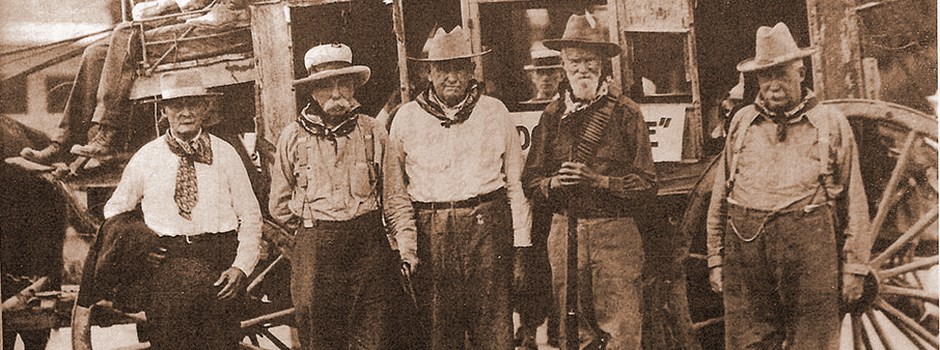
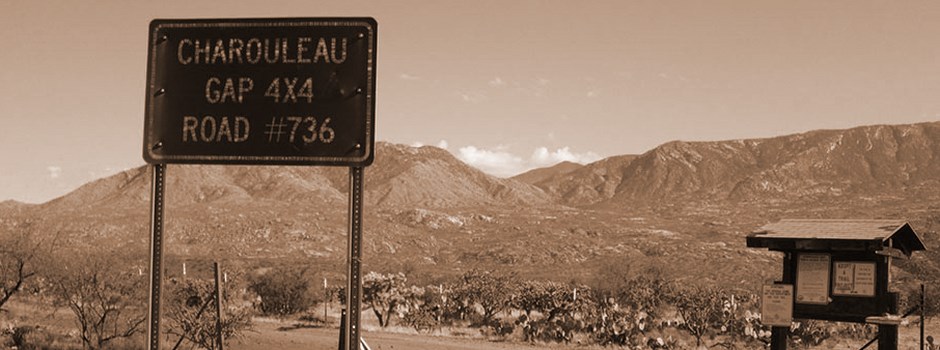
Richard Woffenden, my 2nd husband ....
Mike Speelman

Mike Speelman's paper has been published and you can purchase it (link to photo of document)
In "The Journal of Arizona History (Summer 2015)" Mike Speelman traces the life of Anna Charouleau, her quarrels with her second husband Richard Woffenden, and her struggle to recognize her rights as a married woman against the concept of "common English law "which gave the husband absolute control over the real and personal property of his wife and the profits they produced. Richard Woffenden's lawsuits against his wife lasted several years, but in the end, Anna succeeded in asserting her property rights, and this resulted in a jurisprudence on women's rights in the USA ...
Richard Woffenden
My 2nd husband, Richard Woffenden was born in England. He was the son of Richard and Lizzie Woffenden. He apparently lived in Sacramento, California, for most of the 1850s, maybe it happened in the wake of the gold rush.
In 1860 he resided in Table Bluff, Humboldt County, California, where he planted wheat and potatoes on twelve acres (48 ha) of his 200-acre (809 ha) farm. The land was valued at $ 2,000. (Current 31604 €).
At the age of forty-eight, in May 1863, he was enlisted as a soldier in Company A of the 1st Alpine Battalion of California (Volunteer Infantry). The battalion was essentially responsible for suppressing the incursions of the local Indian tribes into northwestern California.
In June, of the same year, he married Martha Powell. I do not know how long this marriage lasted, nor why it ended.
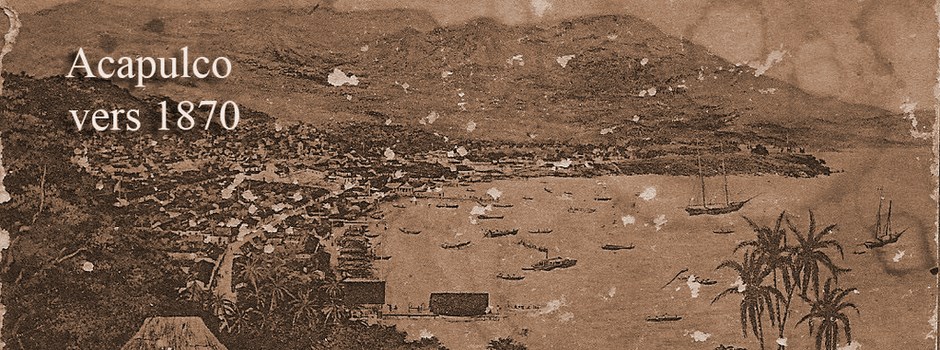
He arrived in a Mexican port, on the Continental steamer, in January 1870, maybe he was on the road that eventually took him to Tucson?
It does not however appear in the Tucson 1870 census, but it can be said that he arrived there in January 1872, when he established two mortgages on loans granted to Mariano Molino and his wife.
He owned "a comfortable fortune: in June 1872 he lent $ 1600 (current $ 25,300) to the newly formed Village Council in Tucson.
That same month, he declared his intention to become a US citizen (he will be sworn in a year later).
In July, it buys thirty lots in town .....
In October, the Board reimbursed him $ 1,724 (current $ 2,7254) on his earlier loan.
That same month, as a member of the People's Party, he failed in his attempt to become a justice of the peace. (In the state of Arizona, Supreme Court judges in counties with populations of less than 250,000 are the only judges that can be directly elected by voters.)
In December 1873, he was inducted and a member of the Literary Society formed in Tucson. He possessed both fortune and culture ... everything to please me.
My wedding with Richard
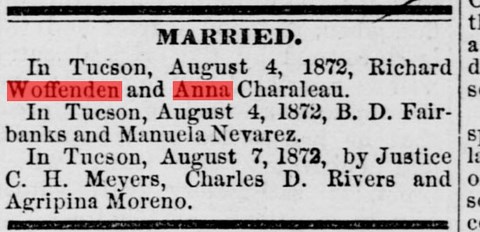
On August 4, 1872, I married Richard Woffenden at a ceremony at the San Agustin Cathedral in Tucson.
I was then nearly sixty years old,.
Richard, was about 57 years old.
After our marriage, we continued to develop our interests and acquisitions of businesses, land, each on its own.
Breaking
It did not take me long to understand that this marriage was about to break. Indeed, a few months later, in February 1873, she was apparent.
But instead of a divorce we have established an act by declaring that "the different unfortunates that have arisen between us would no longer exist ... and that for this reason we have agreed to live separately and independently one the other ".
Richard promised me that he would not exercise "power, pressure, obligations, authority over me, molest or disturb me in my way of life." Finally, he renounced all right and title to my real and personal properties, present and future.
I, for my part, have made similar promises concerning the real and personal property of my husband.
The marital "cover"
As long as the agreement held, the principle of "coverture" a concept of the English common law that gave the husband absolute control over his wife's real and personal property and the profits they produce, is suspended.
The "marital cover" is an archaic legal doctrine whereby, at the time of marriage, the legal rights and obligations of a woman are included in those of her husband, in accordance with the legal status of the wife of feme covert (bride ). On the other hand, a single woman, a single woman, had the right to own property and to conclude contracts in her own name.